
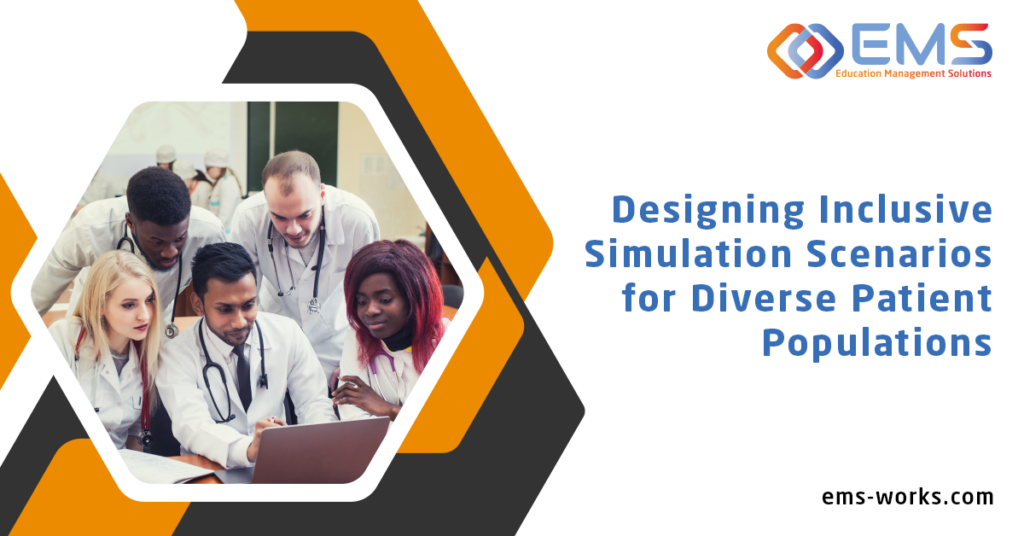
Inclusive simulation scenarios don’t just add diversity to a case, they strengthen clinical reasoning, communication, and patient safety by reflecting the people learners will actually serve. When scenarios account for culture, language, disability, age, gender identity, socioeconomic realities, and health literacy, learners practice delivering care that’s effective, equitable, and respectful.
Below are practical, scenario-ready strategies you can apply right away without turning patients into stereotypes or reducing inclusion to a checklist.
Why Inclusive Simulation Scenarios Matter
Inclusive design improves the quality of learning and the transfer to real care settings by helping learners:
- Recognize how social and structural factors shape access, risk, and outcomes
- Communicate clearly across language and health-literacy differences
- Practice bias-aware decision-making under realistic time pressure
- Build trust through culturally responsive, patient-centered care
These goals align with widely used simulation best-practice frameworks and standards for culturally and linguistically appropriate care.
Start with an Inclusion Brief
Before you draft the narrative, define 6 things:
- Clinical objective(s): What must learners demonstrate clinically?
- Equity objective(s): What inclusion-related behaviors must learners demonstrate?
- Patient context: Language preference, health literacy needs, disability/access needs, family/support dynamics, and barriers to care.
- Avoidable harms: Where could the scenario accidentally reinforce stigma (e.g., “noncompliant” labels)?
- Environmental realism: Where does the encounter happen (ED, clinic, home, rural, mobile unit)?
- Assessment plan: What observable behaviors will you rate?
This mirrors the way many modern simulation blogs structure scenario development: clear goals, actionable checklists, and measurable outcomes.
Build Patient Diversity Into the Clinical Logic
A common pitfall is swapping names/ethnicity while the scenario stays the same. Instead, make the diversity elements clinically meaningful and ethically grounded:
Examples of Inclusion Design
- Health literacy: Learner must use plain language + teach-back for a medication change or discharge plan.
- Language access: The patient prefers another language; learners must appropriately use an interpreter and not “translate” through a family member for sensitive content.
- Disability inclusion: Add an accessibility constraint that affects the exam/workflow (e.g., patient uses an AAC device; learner must communicate effectively while still addressing clinical priorities).
- Socioeconomic constraints: The “best” plan isn’t feasible, learners must choose an evidence-based alternative and connect resources.
Make Inclusion Measurable
If it matters, measure it. Add 3-6 observable items to your evaluation tool, such as:
- Confirms language preference and uses interpreter appropriately
- Uses plain-language explanation and teach-back
- Asks about access barriers (transportation, cost, caregiving) without judgment
- Demonstrates respectful identity-affirming communication
- Offers at least one feasible, patient-centered plan option
Making Inclusive Simulation Scenario Design the New Normal
The best inclusive Simulation Scenarios don’t feel like “special cases.” They feel like real healthcare: complex, human, and shaped by context. When you design for diversity on purpose, you give learners repeatable skills they can carry into every patient encounter.